


A domain model is the essential context for every AI initiative your organisation runs. When the AI works from a shared, current definition of how your business operates - its entities, relationships, and definitions - the outputs reflect your organisation rather than a generalised approximation of it. That’s not a marginal improvement. It’s the difference between AI that understands your business and AI that guesses at it.
Many teams haven’t been able to act on this. Not because they didn’t see the value of a domain model, but because the cost of keeping one current eventually outpaced the capacity to do so. Building a model requires workshops, difficult stakeholder conversations, and significant upfront documentation effort. Keeping it current as the system evolves requires even more. So, despite knowing the value of a domain model, teams make a pragmatic call - the model gets built well at the start, becomes outdated within months, and then quietly stops being used.
AI-assisted domain modeling has changed this equation. The maintenance burden that made ongoing domain modeling impractical can now be largely automated - which means teams are no longer forced to make compromises and can use the right tool for the job.
That changes what’s possible.
When every team is working from a shared, current definition of the business domain, a lot of things that are normally hard become straightforward.
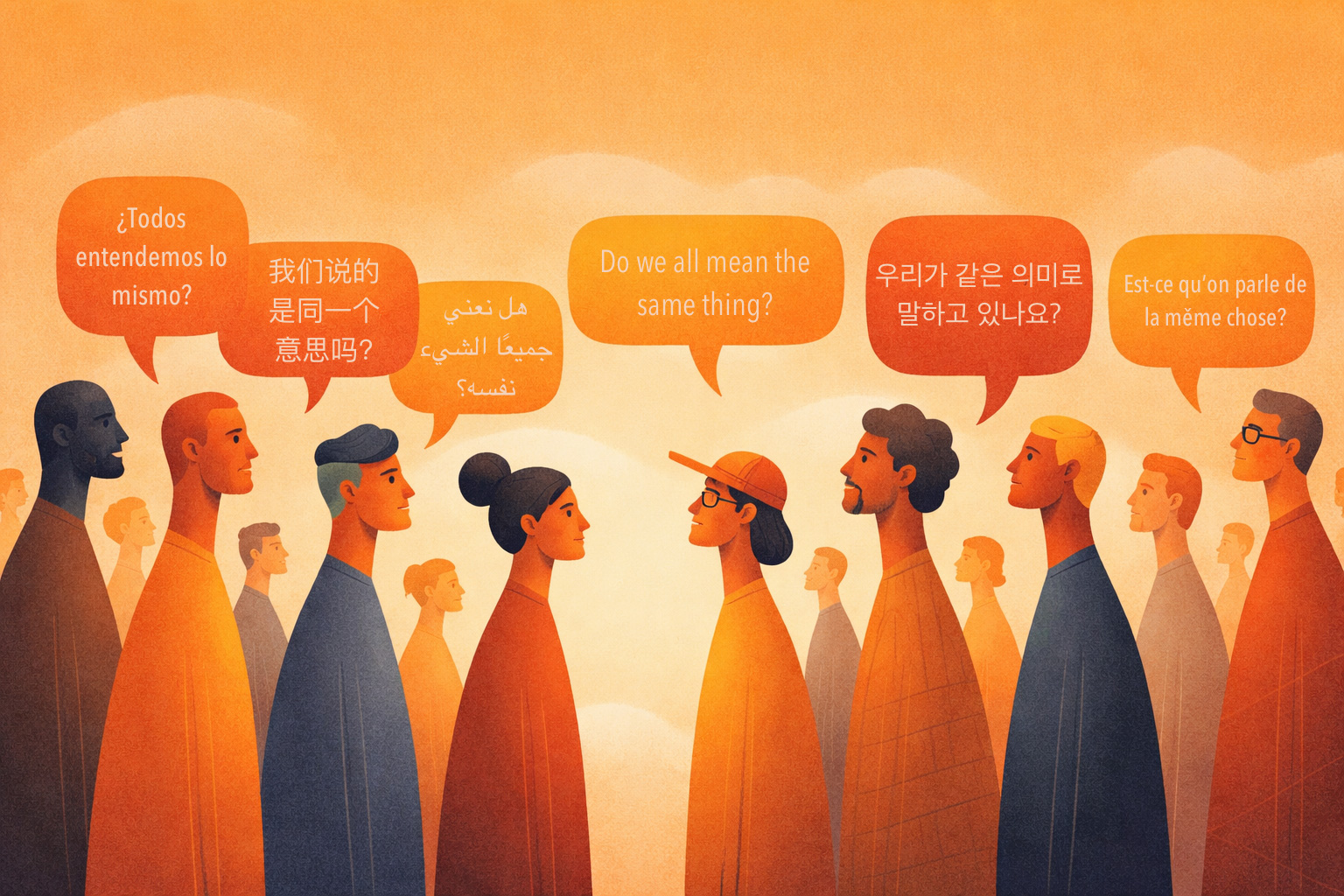
Shared definitions mean AI learns what’s actually true. Everyone knows what a "customer" is - until you ask your sales team, your support team, and your finance team to define it at the same time. Sales counts leads who’ve expressed interest. Support counts anyone who’s submitted a ticket. Finance counts anyone with a recognized revenue event. Same word, three different definitions. In conversation, this is manageable - humans are good at blurring the lines. A current domain model makes these definitions explicit, so your AI now has a consistent definition rather than inheriting the ambiguity and propagating it at scale.
Stakeholder alignment happens before the first architectural decision, not after. A warehouse operation deploying AI to optimize order fulfillment needs every stakeholder to agree on what "pending" and "processing" mean before the training pipeline is built - not after the model has created exactly the bottlenecks it was supposed to eliminate. A current domain model is the forum where those distinctions get documented, agreed upon, and kept current as the system evolves.
ROI becomes measurable before the project starts. Executive teams have shifted from "should we adopt AI?" to harder questions about ROI - and those questions are harder to answer. A current domain model makes that question answerable - surfacing the specific entities and state transitions that drive business value and making specific targets possible. Not "improve fulfillment efficiency," but "reduce the time between order confirmation and warehouse allocation by 40%." AI implementation projects funded on evidence and evaluated against targets, defined before anyone wrote a line of code, are a different proposition entirely.
All of this traces back to the same root cause. Not ignorance of domain modeling - the model just didn’t survive contact with the organization’s capacity to maintain it. In the past, it was too expensive to maintain domain models. Now, with AI, it is possible and essential.
The domain model maintenance burden is gone, and that’s a change worth paying attention to.
Getting to a first baseline is faster: AI can scan existing documentation, codebases, and stakeholder inputs to surface entity structures, relationships, and definitional conflicts on its own. What previously required weeks of careful synthesis now produces a working starting point in days. Human judgment goes into validation and refinement, not first-draft construction.
But the bigger shift is ongoing. With AI handling the continuous work of keeping the model current, teams stop being caretakers and start being users. That is what changes the economics. Instead of spending capacity on upkeep, teams spend it on what the model was always supposed to enable: exploring solution options, stress-testing assumptions, quickly baselining new initiatives, and arriving at the first stakeholder meeting already aligned, instead of losing three weeks to getting there.
Organizations that keep a domain model current accumulate something that compounds over time - a structured record of institutional knowledge, maintained rather than archived.
When senior engineers leave, the knowledge doesn’t walk out with them, and when teams restructure, the shared definitions survive the reorganization. When a new AI initiative lands on the roadmap, the baseline already exists. The question shifts from "do we have time to build a domain model before this kicks off?" to "which parts of the existing model need updating for this one?"
That’s a meaningfully different organization to compete against.
SPAN combines automated analysis of existing systems and documentation with structured stakeholder workshops - producing a working baseline fast and keeping it current without consuming the team in the process. The goal is a maintainable, living model that gets used rather than archived - one that aligns stakeholders, informs training data, and defines measurable outcomes, and that teams return to at the start of each new initiative rather than rebuild from zero.
On a recent engagement for a SaaS platform, SPAN built a comprehensive logical domain model almost entirely from existing client documentation - consolidating workshop transcripts, product requirements, end-user documentation, Confluence exports, and historic requirements PRDs from multiple internal teams. AI-assisted analysis surfaced entity structures, relationships, and definitional conflicts automatically, including differing interpretations of referral statuses and enrollment states between teams. The resulting model covered 57 entities, 150 relationships, and 25 enums across 300 features and functions, 30 process flows, and 10 archetypes covering 21 personas - structured into DBML format. The first pass was generated in 3 days and refined over 3 weeks. Without AI, we estimate the same task would have taken 12 weeks and been beyond the client’s budget. The client’s response was that they were seeing their own system clearly for the first time - and that this clarity would directly inform how they design and make decisions going forward.
Domain modeling still requires genuine stakeholder engagement and difficult conversations about definitions that everyone assumed were already agreed upon. But with the maintenance burden removed, that upfront investment earns a return rather than going stale.
The cost of keeping a domain model alive is now low enough that sustaining one is a realistic commitment - not an aspirational one that loses to the next sprint planning meeting.
Teams that build this now get a structural edge. AI initiatives start from a foundation that reflects how the business works, models train on data that means what it’s supposed to mean, and stakeholder conversations begin already aligned instead of spending the first few weeks getting there. The organizations that do this will simply be faster - at every initiative that follows.
